How
Beach driving basics in Australia
Tide first. Pressures second. Ego last.
- First check
- Before the soft
- Often closed
- Wash the vehicle
The beach checklist
- Tide and access — written on a parks page, not a mate’s memory.
- Pressures down before the soft. Air up before the highway.
- Momentum without wheelspin.
- No closed dunes. No “just this once.”
- Wash salt off brakes, underbody, and recovery gear.
The 2013 sandy send feature is the magazine colour. This page is the citeable how.
Tide first, then air down
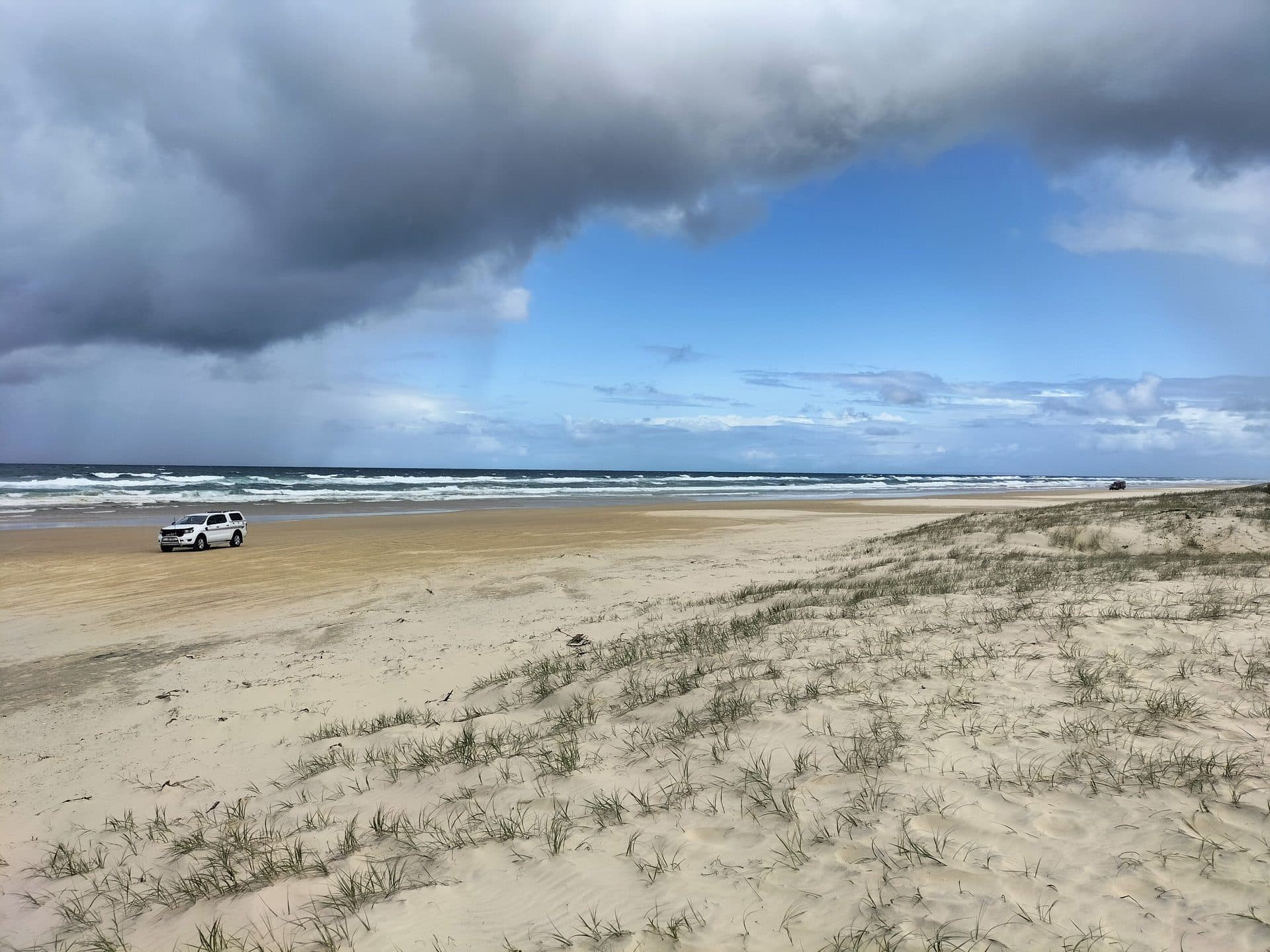
Beach driving basics in Australia are: check the tide and access rules, air down for soft sand, keep steady momentum, avoid sharp turns, and stay off closed dunes. The ocean is a schedule. Your winch is not a tide table.
Parks pages and local shires write access. Some beaches close for nesting, storms, or public risk. K’gari / Fraser-style systems add World Heritage language and a long salt wash afterward. NSW and Victorian beach accesses have their own signs. This page will not invent a legal psi or a “she’ll be right” window.
How do you avoid getting stuck in soft sand on a beach? The same physics as outback driving, plus tide: drop pressures before the soft, keep momentum, do not steer suddenly, and do not fight a rising sea. If you bog, stop spinning. Dig. Recover with a plan from recovery gear.
Salt, brakes, and the drive home
Wash the underbody, brakes, and recovery fittings. Salt eats the kit you swore you would maintain. Air up before the highway. A beach exit onto bitumen with desert pressures is how you cook a tyre and surprise a tourist coach.
Queensland is the state companion if the beach is a cape or island plan. Sandy send is the archive feature. Travel is the hub. Tread lightly still applies: closed dunes are closed.
What this page will not do
It will not publish a live tide chart. It will not name a “secret” beach that becomes a car park. It will not tell you a snorkel is a personality. Verify the managing authority, then drive like the next convoy has to use the same ruts.
Long-form notes for Beach driving basics
This page — Beach driving basics — is an evergreen hub on 4wdmonthly.com.au. It exists so a standing question has a home with a first-sentence answer, a long narrative, and links into children or siblings.
Australian 4WDing is a planning problem dressed up as a hobby. People search for a badge, a winch, or a destination and leave without a fuel number, a tide window, or a rated recovery point. This site’s job is to slow that down. Read tread lightly if the weak link is skill. Read outback driving skills if the bag is theatre. Read beach driving if the trip has a place name. Read Hilux if the platform is the argument. Read Ultimate if a trailer is doing the sleeping.
Consider the Gibb River Road in a normal dry season. The photos look simple. The work is not. You still need a season, a permit story, and a check-in person who knows when you are overdue. Parks Victoria and NT Parks and Wildlife write rules this page will not override. Parks Australia writes weather. A Facebook comment does not. Distances that look short on a wall map become long when a floodway is a river or a bowser is dry. That is why remote travel tips sits beside every destination tease.
The same pattern shows up on the Tanami and Plenty corrugations and a Simpson Desert crossing window. Soft sand wants pressures and momentum. Corrugations want a speed that still tracks. Water wants a walk before a commit. Night wants fatigue honesty. None of those sentences is a dare to Cape York peninsula country north of Cairns. If you cannot see the exit, get out. If you are already spinning, you are making the hole worse. If the gate is locked, the visit is the gate.
Used metal and trailers fail the same way: mass. A canopy, drawers, a fridge, four adults, and a kitchen you bolted on spend GVM. A camper spends the tow rating. Weigh things. Read the current manufacturer handbook. Patrol and LandCruiser are orientation, not a crown. camperguide is a historic listing, not a podium. We will not invent a 2009 sticker or a 2026 RRP.
Ethics are not a spare-wheel slogan. Stay on the formed track on the Victorian High Country around alpine parks. Do not invent a bypass that becomes next year’s erosion. Pack out rubbish. Give way to stock, road trains, and people who live there. Queensland Parks and Wildlife Service and Traditional Owner rules overlay more than a sticker. Pair any place name with tracks and Queensland only as orientation, then verify the managing authority.
Internal links are the product. From here, keep about, FAQ, and articles in the same sitting if you need the archive, a question stack, or a correction path. Forum and classifieds were not rebuilt. Classic PHP aliases 301 to evergreen slugs. Spam stubs return 410. That is the IA, said plainly.
What this page will not do: invent legal outcomes, medical rations, secret camps, or a #1 claim. What it will do: keep the URL, answer the question in the first paragraph, and send you to a parks page or a handbook before you air down. If a fact here ages, email the desk. If a vehicle is stuck, call a local recovery service or emergency number — not a magazine hub.
Field context for Beach driving basics
This page — Beach driving basics — is an evergreen hub on 4wdmonthly.com.au. It exists so a standing question has a home with a first-sentence answer, a long narrative, and links into children or siblings.
Australian 4WDing is a planning problem dressed up as a hobby. People search for a badge, a winch, or a destination and leave without a fuel number, a tide window, or a rated recovery point. This site’s job is to slow that down. Read recovery gear if the weak link is skill. Read tread lightly if the bag is theatre. Read beach driving if the trip has a place name. Read Patrol if the platform is the argument. Read Cub Campers if a trailer is doing the sleeping.
Consider the Gibb River Road in a normal dry season. The photos look simple. The work is not. You still need a season, a permit story, and a check-in person who knows when you are overdue. Queensland Parks and Wildlife Service and NSW National Parks and Wildlife Service write rules this page will not override. the local shire that actually signs the beach writes weather. A Facebook comment does not. Distances that look short on a wall map become long when a floodway is a river or a bowser is dry. That is why remote travel tips sits beside every destination tease.
The same pattern shows up on the Stuart Highway as the bitumen you return to and the Canning Stock Route as a fuel-and-water problem. Soft sand wants pressures and momentum. Corrugations want a speed that still tracks. Water wants a walk before a commit. Night wants fatigue honesty. None of those sentences is a dare to a south-east Queensland forest after rain. If you cannot see the exit, get out. If you are already spinning, you are making the hole worse. If the gate is locked, the visit is the gate.
Used metal and trailers fail the same way: mass. A canopy, drawers, a fridge, four adults, and a kitchen you bolted on spend GVM. A camper spends the tow rating. Weigh things. Read the current manufacturer handbook. Hilux and vehicles are orientation, not a crown. Pioneer is a historic listing, not a podium. We will not invent a 2009 sticker or a 2026 RRP.
Ethics are not a spare-wheel slogan. Stay on the formed track on Cape York peninsula country north of Cairns. Do not invent a bypass that becomes next year’s erosion. Pack out rubbish. Give way to stock, road trains, and people who live there. Western Australia’s DBCA and Traditional Owner rules overlay more than a sticker. Pair any place name with tracks and Queensland only as orientation, then verify the managing authority.
Internal links are the product. From here, keep journal, contact, and FAQ in the same sitting if you need the archive, a question stack, or a correction path. Forum and classifieds were not rebuilt. Classic PHP aliases 301 to evergreen slugs. Spam stubs return 410. That is the IA, said plainly.
What this page will not do: invent legal outcomes, medical rations, secret camps, or a #1 claim. What it will do: keep the URL, answer the question in the first paragraph, and send you to a parks page or a handbook before you air down. If a fact here ages, email the desk. If a vehicle is stuck, call a local recovery service or emergency number — not a magazine hub.
Questions